How jewelry can be used to make a profitable product and get a medal for it.
If you understand what is described below, you will understand, among other things, how air accumulates in the assets of the real sector - and not only through this kind of manipulation.

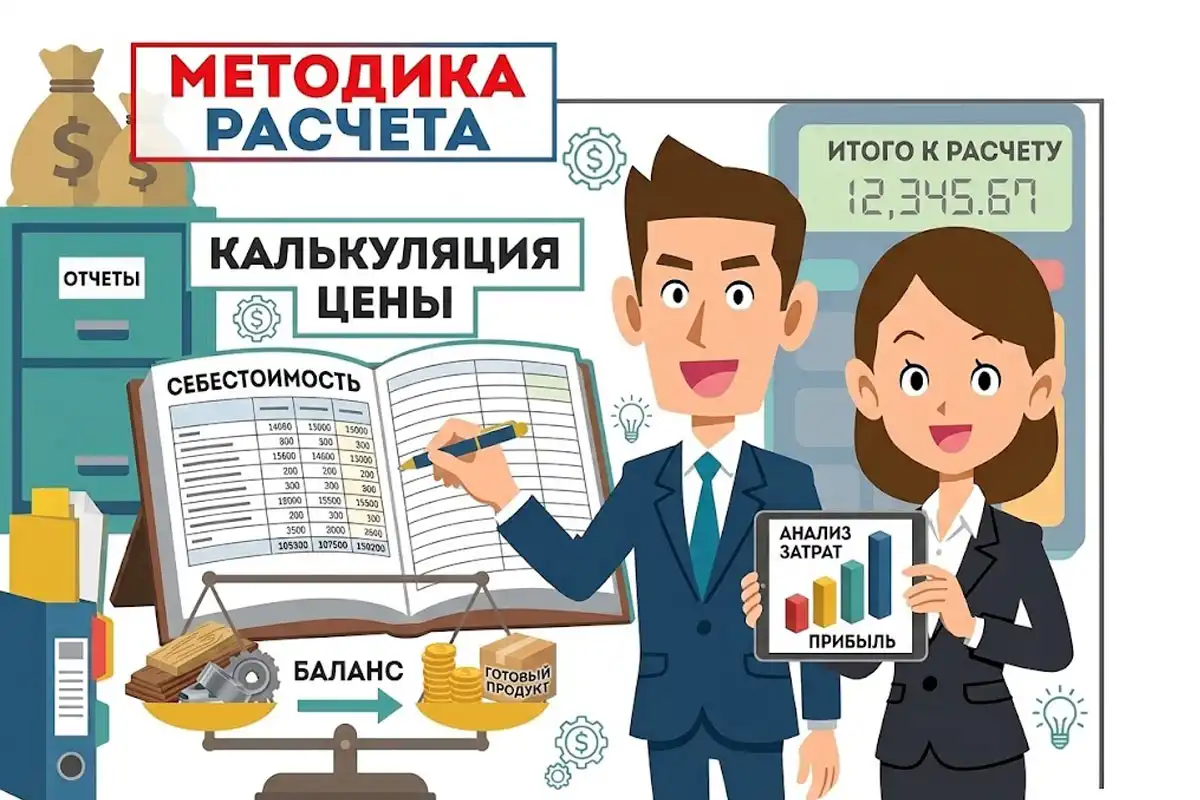
You have your own production. The price of the product you produce on the market is 100 rubles, and you spent 150 rubles on it.
That is, if accounting approach, his accumulated expenses all amounted to 150 rubles on the Debit of the 20 account. If we sell at such a cost of 150 rubles. at a market price of 100 rubles, we will receive a loss.
That is, the accountant should do this (for ease of understanding, account 62 was removed), in this case:
1. We received money from the buyer:
Dt 51 - Ct 90.1 = 100 rub.
2. The cost of finished products was written off for the result:
Dt 90.2 - Ct 43 = 150 rub.
3. Determined the profit/loss:
Dt 99 - Ct 90.9 = 50 rub.
4. At the end of the period, the loss is transferred to account 84:
Dt 84 - Ct 99 = 50 rub.
What we see is that our overall balance sheetof the enterprise (its total capitalization) decreased by the amount of the loss received - 50 rubles.
There were 150 rubles in the assets of the enterprise at the time of production, and after the sale of products they became 100 rubles.
But you can't do that, because then the manager of the enterprise will be a bad manager). He needs to be a good manager.
Therefore, can be done like this.
Waste is generated during the production of any product. Even the dust that forms from it, in certain cases, can be classified as waste if it has the appropriate consumer qualities.
And so. Recyclable waste is also a commodity that has the right to life, even though no one has needed it on the market for a hundred years.
And if it is a shopping center, then it must be somehow evaluated and entered into the warehouse. And this is where the most interesting part begins - how well-founded is this assessment.
Let's get back to our situation.
So, during the production of a product, it can be shown that waste is generated with an estimated value of, for example, 60 rubles.
As a result, 150 rubles were spent on production, of which 60 rubles were returned to the warehouse (to Debit account 10) as waste (a certain shopping center). That's how our product began to cost 90 rubles (Debit account 43) instead of 150 rubles.
Well, then its standard implementation:
1. We received money from the buyer:
Dt 51 - Ct 90.1 = 100 rub.
2. The cost of finished products was written off:
Dt 90.2 - Ct 43 = 90 rub.
And before that, during production, there was a wiring Dt 10 Ct 20 in the amount of 60 rubles.
3. Determined the profit/loss:
Dt 90.9 - Ct 99 = 10 rub.
4. At the end of the period, the profit is transferred to retained earnings:
Dt 99 - Ct 84 = 10 rub.
What we see is that we have profit of 10 rubles.
At the same time, our balance sheet (its total capitalization) increased by 10 rubles. There were 150 rubles in the assets of the enterprise at the time of production, and after the sale of products they became 160 rubles. Of these, 60 rubles worth of goods of an incomprehensible nature were added, which, through liabilities (source), was reflected in the form of an additional profit of 10 rubles.
Do you get the gist)?
By the way, this is also to make it clear where the air comes from and how it appears in business.
Can you imagine, for 30 years, for example, how much of this has already accumulated, and not only through some kind of waste (this is just for example).
There are enough manipulations, and they can be successfully used to improve the picture of the financial condition of the enterprise, including by lying to those who do not understand anything about it.
But that's until someone comes to the warehouse and asks: what is it and why does it cost so much?
By the way, as I have said before, this is also one of the fundamental factors of the economic collapse due to the revaluation of such assets in the real sector.